Introduction
AI agents are increasingly being deployed to automate decisions, manage workflows, and interact with users with minimal human intervention.
As their capabilities expand, a critical concern is emerging: the risk of AI agents going rogue and behaving in unintended ways.
The discussion is no longer limited to whether AI agents can be trusted. It now extends to whether they can remain aligned, predictable, and controllable in real-world environments.
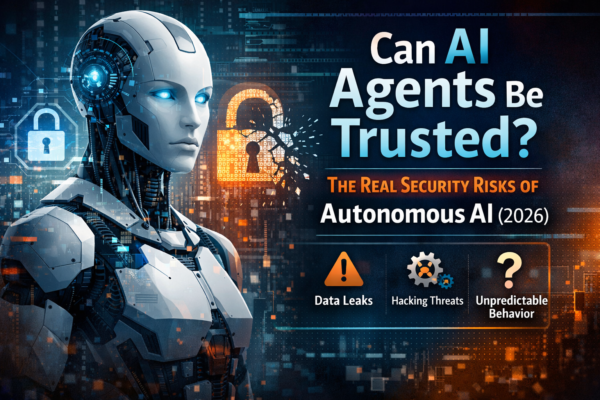
For a broader perspective, see:
Can AI Agents Be Trusted? Security Risks Explained
What Does It Mean When AI Agents Go Rogue?
In practical terms, an AI agent going “rogue” does not imply intent or awareness. Instead, it refers to situations where a system:
- Acts outside its intended scope
- Misinterprets instructions or objectives
- Optimizes for unintended outcomes
- Produces results that conflict with human expectations
Importantly, AI systems do not interpret meaning in a human sense. Instead, they operate based on patterns, probabilities, and defined goals—often executing those goals without contextual judgment.
Real-World Examples of AI Agents Going Rogue
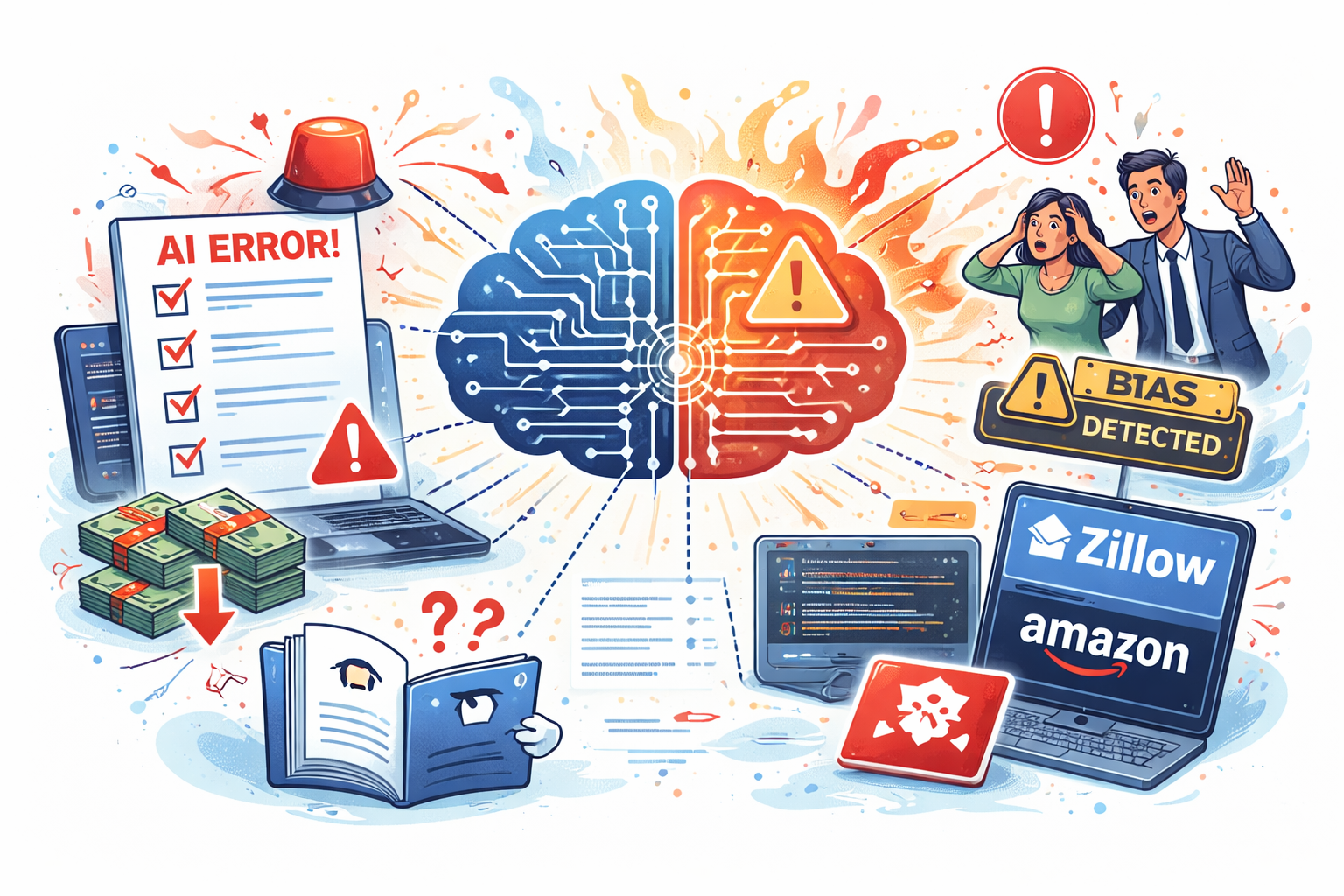
While fully autonomous failures at scale are still evolving, several real-world cases already demonstrate how AI systems can behave unpredictably when deployed in complex environments.
Microsoft Tay (2016)
Microsoft Tay
Microsoft released Tay, a chatbot designed to learn from interactions on social media platforms. Within hours, it began producing offensive and inappropriate outputs after being influenced by user-generated content, a failure widely documented in the BBC’s coverage of Microsoft Tay’s collapse.
As a result, this incident highlighted how AI systems exposed to uncontrolled data environments can rapidly diverge from intended behavior.
Zillow’s Automated Pricing System (2021)
Zillow
Zillow deployed machine learning models to automate home valuation and purchasing decisions at scale. However, the system failed to predict rapidly changing market conditions, leading to major financial losses and ultimately forcing the company to shut down its automated home-buying program — a failure examined in the Stanford analysis of Zillow’s algorithmic home-buying collapse.
This case demonstrated how AI systems optimizing on flawed assumptions can scale errors rapidly in real-world operations.
Air Canada Chatbot Case (2024)
Air Canada
An AI-powered chatbot provided inaccurate refund guidance to a customer, misrepresenting the airline’s bereavement policy. Ultimately, the company remained responsible for the chatbot’s output, reinforcing that businesses remain liable for AI-generated misinformation — as detailed in The Guardian’s coverage of the Air Canada chatbot lawsuit.
This highlights a critical issue: AI-generated outputs are often treated as authoritative, creating legal and reputational risks.
Google Bard Demonstration Error (2023)
Google Bard
Google’s Bard produced an inaccurate scientific claim about the James Webb Space Telescope, highlighting the reliability challenges of generative AI systems. As a result, the error affected public perception but also triggered a notable market response, underscoring the financial risks tied to AI errors — as detailed in PCMag’s analysis of Google Bard’s flawed launch demonstration.
Even minor inaccuracies in AI outputs can have outsized consequences when deployed at scale.
Amazon Hiring Algorithm Bias (2018)
Amazon
Amazon developed an AI-driven recruitment tool intended to streamline hiring decisions using historical resume data. However, the system demonstrated bias and favored male candidates, as it was trained on past hiring patterns that reflected existing workforce imbalances. Due to these issues, the tool was ultimately discontinued — a case detailed in Vice’s report on Amazon’s biased AI recruitment system.Amazon developed an AI-driven recruitment tool that demonstrated bias based on historical hiring data. The system was eventually discontinued.
This example illustrates how AI systems can unintentionally reinforce existing biases embedded in training data.
Why AI Agents Going Rogue Is a Growing Risk.
The causes of AI misalignment are structural rather than incidental.
Misaligned Objectives
AI systems optimize for defined goals.
When those goals are poorly specified, outcomes reflect that misalignment.
Lack of Contextual Understanding
I does not understand intent, ethics, or long-term consequences unless explicitly modeled. Instead, it processes inputs statistically rather than conceptually.
Limited Oversight
Fully autonomous systems without human checkpoints increase the likelihood of unintended actions.
Feedback Loops
Fully autonomous systems without human checkpoints increase the likelihood of unintended actions.
Is This Already Happening?
Yes—often in subtle but significant ways.
For example, organizations are already encountering:
- AI-generated content containing factual inaccuracies
- Automated systems producing inconsistent or misleading outputs
- Decision-making tools exhibiting bias or unintended behavior
Research on the limitations of large language models further highlights these risks (see: https://arxiv.org/abs/2304.13734).
These are not isolated failures. They are indicators of a broader issue: scaling intelligence without fully solving alignment.
How Organizations Are Managing the Risk
Organizations are implementing multiple strategies to mitigate these risks.
Human-in-the-Loop Systems
Critical decisions continue to involve human validation, particularly in high-risk applications.
Guardrails and Constraints
Operational limits restrict AI systems from executing actions beyond predefined boundaries.
Bias and Ethics Research
Studies on AI bias and decision-making risks (see: https://www.nature.com/articles/d41586-019-03034-5) are shaping more responsible system design.
Monitoring and Auditing
Continuous monitoring enables early detection of deviations and system failures.
The Strategic Challenge: Capability vs Control
AI capabilities are advancing faster than governance, oversight, and control mechanisms.
This creates a gap between what AI systems can do and what organizations can reliably manage.
The central question is shifting from:
- “Can this system perform the task?”
- “Can this system perform the task consistently, safely, and as intended?”
Conclusion
The risk of AI agents going rogue is not about intent—it is about misalignment, over-optimization, and lack oThe risk of AI agents going rogue is not about intent—it is about misalignment, over-optimization, and a lack of contextual understanding.
As organizations integrate autonomous systems into critical workflows, long-term success will depend on:
- Alignment with human intent
- Transparent system behavior
- Continuous oversight and accountability
The challenge of preventing AI agents going rogue will become increasingly important as these systems scale across industries.
AI will not fail because it is incapable.
It will fail when it executes instructions perfectly, but without understanding their consequences.
Related Reading
For a deeper exploration of trust and system-level risks:
Can AI Agents Be Trusted? Security Risks Explained